BREAKING

Tuesday, May 20, 2025

Guardians of Democracy: Angara Applauds PBBM, DBM for Boosting Teachers’ Election Honoraria


Wazzup Pilipinas!?


In an inspiring affirmation of the nation’s gratitude to its silent heroes, Education Secretary Sonny Angara extended his heartfelt thanks to President Ferdinand "Bongbong" Marcos Jr. and Budget Secretary Amenah Pangandaman for granting an additional ₱1,000 across-the-board election honoraria to teachers and other poll workers. This latest gesture serves as both financial relief and a symbolic recognition of the immense role educators play in preserving the integrity of Philippine democracy.


The Department of Budget and Management (DBM) has greenlit the release of ₱758.459 million, ensuring that over 758,000 poll workers, predominantly public school teachers, will receive the added compensation on top of the previously approved ₱2,000 increase under the 2025 General Appropriations Act. The Commission on Elections (COMELEC) has assured that full election compensation, inclusive of these increases, will be disbursed within ten days after election day.


A Nation’s Salute to Its Educators

“Every hour they spent at the precincts, many working past midnight, is a testament to their public service,” Secretary Angara declared, his voice echoing the sentiments of countless Filipinos who witnessed their teachers—often unassuming and overburdened—transform into frontline defenders of electoral integrity.


He emphasized that the honoraria boost is “more than a financial relief… it is symbolic of the country’s respect for teachers as guardians of democracy.”


Indeed, election day for these educators isn’t confined to casting votes. From dawn till deep into the night, they oversee the polls, calm agitated voters, ensure the accuracy of vote counts, and remain vigilant against fraud and technical issues. Often, they sacrifice their weekends, holidays, and rest days to prepare for and conduct elections with utmost impartiality and precision.


Record-Breaking Turnout: A Testament to Teacher Leadership

This year's elections shattered expectations, registering an 81.65 percent voter turnout — the highest in COMELEC history. Secretary Angara did not hesitate to credit this remarkable civic engagement to the dedication of teachers and DepEd personnel who worked tirelessly to prepare for the elections, train for emergencies, and manage voters with compassion and efficiency.


“We know our teachers and staff played a vital role in ensuring the credibility, order, and success of the polls,” Angara affirmed. “Their commitment empowered more Filipinos to believe in the process and cast their votes.”


Presidential Directive: A Step Towards Justice

Secretary Pangandaman confirmed that the additional ₱1,000 was a result of a directive from President Marcos, underscoring his administration’s commitment to fair and just compensation for the unsung election frontliners. It reflects a broader agenda to honor the hard work of educators who continuously go above and beyond their roles, not only within the classroom but in every facet of public service.


For decades, election-related duties have weighed heavily on teachers, often with minimal recognition and modest remuneration. This long-overdue adjustment, while still modest in the eyes of many, sets a precedent for future administrations to prioritize the welfare of these vital workers.


A Call for Sustained Support

While the honoraria increase has been widely welcomed, educators’ groups and civic organizations continue to call for institutional reforms — including hazard pay, increased legal protection, and health insurance coverage — recognizing that election duty is not without risks. Harassment, fatigue, and even threats of violence are part of the burden they carry quietly, year after year.


Nonetheless, the latest development marks a hopeful shift toward a more appreciative and equitable treatment of teachers in the electoral process.


Final Word: A Democracy Built on Dedication

In every school that turned into a polling station, behind every ballot counted, and in every long queue that moved with order and trust — there stood a teacher, steadfast and principled. This ₱1,000 may seem like a small token, but for many educators, it speaks volumes.


It is a nation’s way of saying: Thank you for holding the line.

Thank you for believing in democracy even when it is hard.

Thank you for being more than just teachers — but defenders of the people’s voice.


As the dust settles from the historic May 2025 elections, one thing is clear:

The soul of our democracy beats strong, because the hands that cradle it belong to our teachers.


By Ross Flores Del Rosario

Founder, Wazzup Pilipinas – Your Voice, Your Story, Your Philippines

Seconds That Save Lives: How the Philippines is Becoming Southeast Asia’s Beacon of Emergency Response and Resilience


Wazzup Pilipinas!?


In a region often at the mercy of typhoons, earthquakes, and man-made disasters, one country is quietly but powerfully rewriting its narrative—not as a nation in need, but as a global model of disaster resilience and smart governance.


The Philippines, long familiar with the chaos left by natural calamities, is turning the tide with one crucial innovation: a next-generation 911 emergency response system that rivals those in the United States and Europe. Now fully operational in a growing list of local government units (LGUs)—including Morong, Rizal; Cebu City; Tagbilaran City; and Cagayan de Oro—the country is proving that technological transformation, when guided by visionary leadership, can save not only lives but an entire nation’s future.


A Race Against Time: Response in Just 3 to 5 Minutes

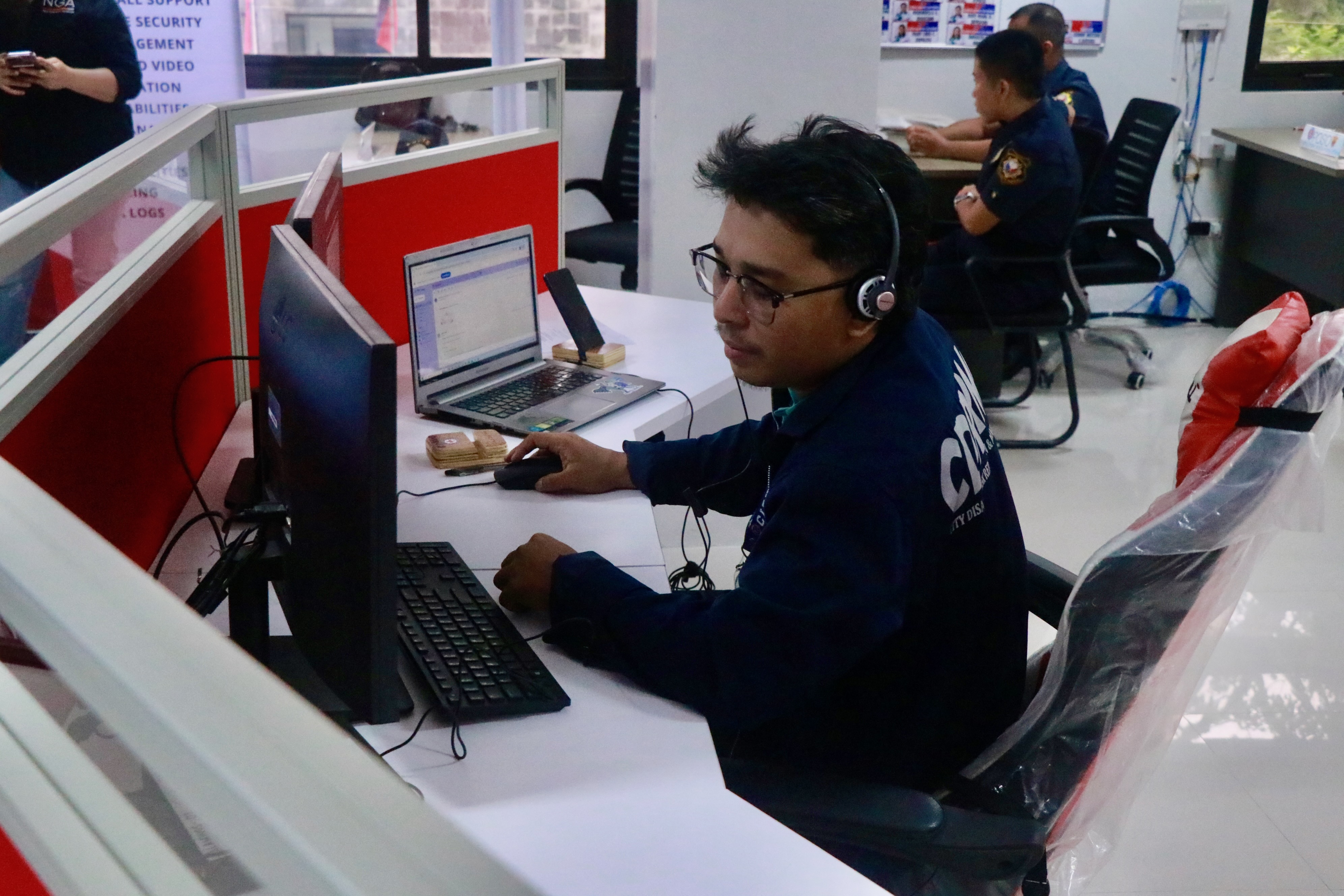
Imagine your home engulfed in flames, your loved one having a stroke, or your village under sudden floodwaters. In such moments, every second matters. In these newly upgraded LGUs, response teams are now deployed within just 3 to 5 minutes of receiving an emergency call or message. This speed is made possible by cutting-edge IP-based command centers equipped with real-time multimedia communication tools—allowing distressed citizens to send texts, photos, or even videos to help responders assess the scene before they arrive.


For residents of these LGUs, it’s a revolution. For the rest of the nation, it’s a glimpse into the future.


Tech with a Purpose: Innovation That Saves Lives

“This isn’t just about faster response times. It’s about smarter, safer, and more accountable governance,” says Don Ferguson, CEO of NGA 911 LLC and one of the minds behind the revolutionary emergency tech now being adopted in the Philippines.


A respected figure in the U.S. and Europe’s public safety sectors, Ferguson sees the Philippines as fertile ground for transformation. “The LGUs using NGA 911’s technology are now equipped for coordinated, data-driven decision-making—something that’s crucial during large-scale disasters,” he explains.


Among the system’s standout features:


Precise geolocation, ensuring responders go exactly where they’re needed


Multimedia capabilities, allowing dispatchers to receive and analyze live photos or videos


Prank call elimination, thanks to caller authentication tech


Inter-agency coordination, improving efficiency during disasters and crises


A New Identity: From Calamity Magnet to Crisis Model

With the Department of Interior and Local Government (DILG) advocating for a unified national emergency system, the Philippines is no longer just reacting to disasters—it is preparing for them with military-like precision. And this preparation is reshaping how the world sees the country.


According to Ferguson, tourists, investors, and international agencies are taking notice. “When a country shows it can take care of its people—especially during emergencies—it builds trust,” he says. “And trust attracts both tourism and investment.”


This sentiment is already being felt on the ground. Regions with these systems in place are seeing:


Increased traveler confidence


Boosts in local economic activity


Job creation in tech and emergency services


Innovation hubs forming around public safety technologies


From Crisis to Confidence: The Bigger Picture

But beyond the numbers and systems is a deeper truth: this shift is about empowering every Filipino citizen, from the remotest barangay to the most urban district. With this technology, help is always within reach, regardless of social status or geographic location.


It also allows for a new kind of governance—one that is transparent, accountable, and data-informed. Every emergency call becomes part of a digital trail that tracks how public servants respond. Performance can be measured. Resources can be optimized. And lives, most importantly, can be saved.


The Vision Ahead: A Nation That Leads, Not Lags

“The future will be bright,” Ferguson confidently declares. “With this infrastructure in place, the Philippines won’t just be known for its beaches and food—it will be recognized as a leader in innovation and in protecting its people.”


For a country that has long weathered storms—both literal and metaphorical—this shift is more than just technological. It’s cultural. It’s transformational. It’s a rebirth of identity, from victim of calamity to vanguard of resilience.


Final Word

If fully implemented across the country, the Philippines’ advanced emergency response system could become one of its most powerful legacies in the 21st century. It’s not just a story of software and sirens. It’s a story of people who deserve to be protected—and of leaders finally making that promise real.


In a time when emergencies are inevitable, being ready isn’t just smart—it’s heroic. And the Philippines may be leading the way.

Monday, May 19, 2025

Beyond "Libreng Kolehiyo": The Story That Made Bam Aquino Matter Again


Wazzup Pilipinas!?


In the theater of Philippine politics, successful campaigns aren’t built on mere slogans—they thrive on powerful, resonant stories. And at the heart of every winning narrative lies a structure: a voter, plagued by a problem, meets a guide who offers a solution, issues a call to action, warns of looming defeat, and promises redemption through victory.


In the case of Bam Aquino, this wasn’t just campaign strategy—it was survival.


The Mismatch That Almost Was

Years before the 2025 elections, I wrote about a classic case of narrative misalignment—Prospero Pichay’s failed Senate bid. It was a cautionary tale about politicians who bank on legacy or past favor, failing to anchor their relevance to the needs of the present.


That lesson came roaring back when I examined Bam Aquino’s 2022 campaign. Despite his key legislative legacy—Libreng Kolehiyo, the law that opened college doors to countless Filipinos—his numbers were stagnant. Polls showed near-perfect name recall, yet little voter traction. The disconnect was stark: people knew who he was, but not why they needed him now.


Because Libreng Kolehiyo was already law, voters didn’t feel compelled to re-elect the “Ama ng Libreng Kolehiyo.” If the mission was accomplished, what else was there to fight for?


And so, the puzzle emerged: If people don’t vote to say thank you, if they vote because they still need you, how could Bam still matter?


The Answer Wasn’t the Law—It Was What It Represented

Then came a realization—one that slowly dawned during reflective, post-election walks.


It wasn’t just about Libreng Kolehiyo. It was about what that law symbolized.


In 2022, the dominant campaign message was unity. The country, torn by years of divisive politics, was promised healing and cooperation. President Bongbong Marcos cornered that message with "Bangon Bayan Muli," while VP Leni Robredo leaned hard into combative energy, which only inflamed the political divide.


But three years into that promise of unity, what had really changed?


Filipinos were still reeling from inflation, inefficient services, crumbling infrastructure, and endless political chaos. What unity? Congress was embroiled in hearings and impeachment battles. The specter of Duterte at the ICC loomed large. The average Juan, meanwhile, still couldn't put three decent meals on the table.


The government was dysfunctional. Politics had devolved into theater. Filipinos needed something different—someone different.


Enter Bam Aquino: The Quiet Rebel

Bam didn’t pick up a megaphone and shout. He didn’t join the mudslinging. He kept his head down and got to work—a trait that has long defined him.


His Exhibit A? Libreng Kolehiyo.


But rather than wave it around as a solo achievement, Bam’s team crafted a nuanced message: this wasn’t just a bill; it was proof that working across political divides—yes, even with then-President Rodrigo Duterte—could yield real, life-changing results.


Strategically, they amplified this across platforms: videos of Bam thanking FPRRD for pushing Libreng Kolehiyo through (despite Aquino being a minority senator), circulated online. His mother campaigned in Davao, the heartland of Duterte support, with Bam paying homage to her “Tapang at Malasakit”—the very words Duterte popularized.


Even when VP Sara was hit with impeachment talks, Bam didn’t pander to his Pink base. He called it a “politicians’ issue,” choosing maturity over partisanship—earning ire from some supporters but respect from many more.


The result?


Suddenly, Bam Aquino wasn’t just the Aquino of the Yellow narrative. He was a redefined figure: principled but pragmatic, opposition yet cooperative, reformist but respectful.


He was, in essence, acceptable to both the Pink camp and the DDS.


The Hero’s Journey: A Modern Campaign Parable

Let’s revisit the story structure that underpins every compelling political narrative:


The Voter – the ordinary Filipino, exhausted from false promises and endless political showdowns.


The Problem – a government that talks a lot but delivers little; a nation adrift in dysfunction.


The Guide – Bam Aquino, quiet but capable, not another face in the shouting match, but a proven problem-solver.


The Solution – cross-partisan cooperation, legislation that impacts lives, and a work ethic that transcends noise.


The Call to Action – "If you're tired of the circus, vote for someone who gets things done."


The Stakes – another six years of stagnation, division, and dysfunction.


The Victory – a Senate that works, a country that heals, and a future finally within reach.


The Real Message That Won

In the end, it wasn't just Libreng Kolehiyo that won votes for Bam Aquino. It was the story behind it.


It was the narrative of a man who could have clung to a political dynasty's name, but instead carved his own path. A leader who didn’t grandstand but delivered. Who found ways to work with those across the aisle. Who embodied unity—not as a hollow slogan, but as a governing principle.


Bam Aquino didn’t ask voters to remember what he did. He asked them to imagine what more he could do, especially in a time when the country needed more doers and fewer talkers.


And for over 20 million Filipinos, that story was worth believing in.


Final Word

Politics will always be messy. But in that mess, stories matter. Not fairy tales. Not nostalgia. But real, grounded, compelling stories that speak to the present and offer a vision of what’s possible.


Bam Aquino found that story.


And because of that, the voters found him.

Ang Pambansang Blog ng Pilipinas Wazzup Pilipinas and the Umalohokans. Ang Pambansang Blog ng Pilipinas celebrating 10th year of online presence
 
Copyright © 2013 Wazzup Pilipinas News and Events
Design by FBTemplates | BTT