BREAKING

Tuesday, October 15, 2024

Karaoke Manekineko Celebrates Grand Opening at Metro Point Complex, Kajang with All-Day RM20 Promotion


Karaoke Manekineko Malaysia is excited to announce the grand opening of its new outlet at Metro Point Complex, Kajang. To celebrate, they are offering an exclusive all-day singing session for just RM20 per person, along with free flow drinks and tidbits.

Karaoke Manekineko Malaysia, one of the nation’s most popular karaoke chains, is thrilled to expand its presence with the launch of a brand-new outlet at Metro Point Complex, Kajang. To mark this special occasion, Karaoke Manekineko is rolling out a grand opening promotion that is sure to delight all karaoke lovers.

Starting from today, customers can enjoy an all-day singing session for just RM20 per person. This exclusive promotional rate allows guests to sing their hearts out for 3 full hours, making it an unbeatable deal for anyone looking to have fun with friends and family. In addition to the amazing rate, guests can also take advantage of free-flow drinks and a selection of delicious tidbits throughout their session, ensuring a complete karaoke experience.

The new outlet is located at: Lot 3-2, Level 3, Metro Point Complex, 8, Jalan Jelok 6, 43000 Kajang, Selangor.

Promotion Details:

Price: RM20++ per pax

Duration: 3-hour singing session

Inclusions: Free flow drinks & tidbits

Note: Prices are exclusive of SST (8%) & service charge (10%).

Karaoke enthusiasts are encouraged to visit the new outlet and take advantage of this fantastic promotion. Bookings can be made by calling or WhatsApp 012-7603177. For more information, please visit the official website at www.karaokemanekineko.my or follow Karaoke Manekineko Malaysia on Facebook, Instagram and Twitter for the latest updates.

Karaoke Manekineko Malaysia looks forward to welcoming everyone to the new Kajang outlet and sharing the joy of music, fun, and great times together.

About Koshidaka International KL Sdn Bhd

Koshidaka International was incorporated in 2021 at Kuala Lumpur, Malaysia as a full subsidiary of Koshidaka Holdings. The company serves as a management consultancy arm for the Karaoke Manekineko operations in Malaysia, Thailand, and Indonesia. Karaoke Manekineko is a friendly and safe environment for Karaoke that is designed to accommodate a diverse range of customers, from families with young children to groups of friends and corporate teams.

This press release has also been published on VRITIMES
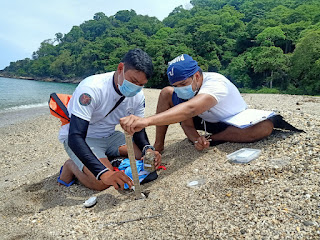
Documentary on UP Marine Science Institute’s work on plastics wins at Bantog Awards

Wazzup Pilipinas!?


MSI researchers are collecting sediment samples from coastal areas, which will be analyzed in their laboratory to detect the presence of microplastic particles. (Photo credit: Microbial Oceanography Laboratory)

A documentary featuring projects of the University of the Philippines – Diliman College of Science’s Marine Science Institute (UPD-CS MSI) received the Best Science and Technology Investigative Story (Audio-Visual) trophy at the Department of Science and Technology’s 2024 Bantog Awards for Science Communication.

Produced by the GMA Integrated News Digital Innovation and Strategic Lab for their DigiDokyu segment, the episode, “Ang Plastic Mo! The Philippine Plastic Problem,” delved into the effects of plastic on the country’s marine environment, the livelihoods of fisherfolk, and the food supply.

According to the World Bank, as cited in the documentary, the Philippines produces 2.7 million metric tons of plastic annually, 20% of which ends up in the ocean. Published research on plastics frequently mentions the Philippines as a top contributor to marine plastic pollution, yet most of this research is based on model projections and lacks actual baseline data collected from Philippine marine areas. The growing problem of plastics in the country and the lack of accurate data on plastics pushed MSI to create projects addressing plastic pollution.


PlastiCount Pilipinas

PlastiCount Pilipinas aims to raise awareness among Filipinos about the widespread presence of plastics, particularly in marine environments and coastal communities, by quantifying plastic pollution in the Philippines, thereby encouraging action to address the issue. The Institute’s innovative project utilizes advanced technologies, such as artificial intelligence (AI), to efficiently count and collect comprehensive and reliable information on plastics in Philippine waters, and to effectively visualize and understand their composition in local communities. Quantifying mismanaged plastics allows the Philippines to establish metrics to track increases or decreases in plastic waste. Identifying plastic debris in the country’s waters can also help in developing policies and solutions tailored to the types of plastic found in specific locations.


Circular Explorer Project

In partnership with the cement manufacturing company Holcim and the environmental organization One Earth One Ocean, MSI launched the Circular Explorer Project to empower students and communities to practice environmental sustainability through a science-driven approach to ocean research. The Circular Explorer is the first solar-powered sea vessel designed to collect plastic waste from the water for recycling and is capable of clearing up to four tons of plastic daily with its built-in sensors and plastic collectors.


PlasMics Project

MSI also oversees the DOST-funded Plastics in the Marine Environment, Trophic System, and Aquaculture in the Philippines (PlasMics) Project, which aims to determine the prevalence and potential impact of plastics on the marine environment, as well as their implications for biodiversity and aquaculture.

Dr. Deo Florence Onda, principal investigator of the Microbial Oceanography Laboratory (MOLab) responsible for these projects, shared that MSI is now working with agencies such as the Department of Environment and Natural Resources to harmonize the projects' methodologies for national baselining. “The technology we are developing is already being adopted by national government agencies. That’s what we want – the university develops technology, and the national government adopts it for roll-out, application, and institutionalization.” MOLab also aims to make its initiatives more accessible to the general public through collaborations with media organizations.

DOST’s Bantog Awards for Science Communication aims to expand public interest in science, technology, and innovation, as well as to enhance science literacy in the Philippines. This year’s theme is “Driving Developments through Science Communication.”

By: Eunice Jean Patron

Why Traditional Politicians and Political Dynasties Continue to Dominate Philippine Elections


Wazzup Pilipinas!?


In the Philippines, elections are meant to be a time for change, where voters can usher in leaders who will improve the country and better serve their needs. However, despite the numerous corruption scandals, controversies, and governance failures tied to traditional politicians (often referred to as "trapos") and political dynasties, these figures continue to dominate the country's political landscape. This enduring phenomenon raises the question: why do they keep winning, and what sustains their power in a democracy where change should theoretically be within the reach of voters?


1. The Power of Name Recall and Political Branding

In a country where elections often feel like popularity contests, the power of name recall cannot be understated. Political families, some of whom have been in power for decades, have become household names. These families have established brands in their regions or even nationwide. For many voters, a familiar name brings with it a sense of security. This is why political dynasties tend to dominate — their names are synonymous with governance, regardless of whether their leadership has been effective or marred by corruption.


2. Patronage Politics and the Culture of "Utang na Loob"

The concept of utang na loob (debt of gratitude) plays a crucial role in Philippine politics. Traditional politicians maintain their grip on power by establishing patronage networks, where resources, jobs, and favors are exchanged for votes. In rural areas, politicians provide financial assistance, medical help, or even basic necessities, creating a direct relationship of dependency between the electorate and the politician.

During election season, this translates into vote-buying, but it goes deeper than just one-time handouts. Families feel indebted to political figures who have helped them during times of need, and this social expectation to repay them at the polls is strong. It’s an unwritten contract that keeps the same figures in power, regardless of their governance record.


3. Weak Political Institutions and Voter Disempowerment

Philippine political institutions are weak, and the country lacks mechanisms that could enforce accountability in its political system. Investigations into corrupt officials often take years, and even when found guilty, many traditional politicians manage to bounce back, either by appealing their cases, exploiting legal loopholes, or fielding family members to continue their influence.

Additionally, many Filipinos feel disempowered by the system. Voter education is not widespread, and poverty forces voters into a cycle where immediate benefits like cash or goods in exchange for votes matter more than long-term governance reforms. In short, there is a disconnect between the voters' immediate needs and the bigger picture of electing a leader who can uplift their communities in the long run.


4. The Role of Media and Propaganda

Political dynasties and traditional politicians have vast resources at their disposal, and they use them to dominate the media landscape. They flood television, radio, and social media with advertisements that paint them as benevolent public servants. Meanwhile, disinformation campaigns target their opponents, spreading fake news or malicious rumors to discredit challengers.

In this information war, underfunded independent candidates struggle to make their voices heard. This gives traditional politicians the upper hand, as voters only see and hear the candidates who can afford to saturate the media with their presence, skewing public perception in their favor.


5. Exploiting Weak Opposition

In many cases, traditional politicians and dynasties do not face formidable opposition. The Philippine political system allows for multiple parties, but most of these are weak and personality-driven rather than built on concrete platforms or ideologies. As a result, opposition figures often fail to present a united front, leaving the electorate with fragmented alternatives.

The lack of a viable challenger allows traditional politicians to sweep the elections, as voters often opt for the "devil they know" rather than risk electing an unknown or untested candidate.


6. Manipulating Election Laws

Philippine election laws, while robust in theory, are often manipulated by those in power. Dynasties bypass term limits by having relatives run in their place. In some cases, politicians ensure their power through gerrymandering or controlling election officials, making it nearly impossible for opposition candidates to gain a foothold.

Additionally, the lack of strong enforcement of campaign finance laws allows traditional politicians to outspend their opponents. With significant resources at their disposal, they drown their challengers in a sea of campaign ads, events, and vote-buying operations.


7. Voter Apathy and the Myth of "No Alternative"

For many Filipinos, elections have become synonymous with hopelessness. Years of seeing the same faces in power, witnessing repeated cycles of corruption scandals, and experiencing broken promises create a sense of cynicism. Many voters feel like there is no real alternative to the entrenched political elites, which leads to low voter turnout or voting out of resignation.

This apathy is further fueled by the belief that one vote won't make a difference or that whoever gets elected will act the same way. The myth that "all politicians are corrupt" demoralizes the public, allowing traditional politicians to continue winning by default.


8. Economic Inequality and Lack of Education

The socio-economic reality of many Filipinos cannot be ignored in this equation. Poverty makes people more vulnerable to manipulation, especially during elections. When a politician offers a voter a few hundred pesos, or food in exchange for support, it’s a difficult offer to turn down for families struggling to meet basic needs.

Moreover, political education remains inadequate, with many voters not fully understanding their power and the importance of scrutinizing the backgrounds, platforms, and performance of candidates. Traditional politicians exploit this lack of awareness, framing elections as popularity contests rather than contests of ideas or platforms.


Breaking the Cycle

While it may seem disheartening, breaking the hold of traditional politicians and political dynasties is possible, but it requires systemic reforms and active civic participation. Strengthening political institutions, enforcing anti-dynasty laws, promoting voter education, and fostering a culture of accountability and transparency are key.

The rise of grassroots movements and independent candidates challenging entrenched elites shows that change is possible. For real transformation, however, the public must demand more from their leaders — both during and after election season.

Philippine democracy is at a crossroads. It can either continue to allow trapos and dynasties to dominate, or the people can seize their power back, demanding integrity, competence, and accountability from those who seek to govern. The future is in the hands of the voters.

In summary:

 
Why Traditional Politicians and Dynasties Dominate Philippine Elections:

Name Recall and Branding – Familiar names offer a sense of security.
Patronage Politics – "Utang na loob" creates voter dependence.

Weak Institutions – Lack of accountability and legal loopholes favor the powerful.

Media Control – Wealthy politicians dominate media, silencing challengers.

Weak Opposition – Fragmented opposition allows dynasties to thrive.
Election Law Manipulation – Dynasties bypass laws through loopholes.

Voter Apathy – Cynicism leads to low turnout and resignation.

Poverty and Lack of Education – Vulnerability to vote-buying and limited political awareness.

Breaking the Cycle:
Strengthen institutions, enforce anti-dynasty laws, educate voters, and support grassroots movements.

Ang Pambansang Blog ng Pilipinas Wazzup Pilipinas and the Umalohokans. Ang Pambansang Blog ng Pilipinas celebrating 10th year of online presence
 
Copyright © 2013 Wazzup Pilipinas News and Events
Design by FBTemplates | BTT
