BREAKING

Friday, May 5, 2023

UP mathematicians find safer contraceptive hormone doses


Wazzup Pilipinas!?


The amount of hormones in contraceptives can be reduced by as much as 92% without impacting their effectiveness, new math research from the University of the Philippines – Diliman College of Science (UPD-CS) has found.

Using mathematical models, researchers from the UPD-CS institute of Mathematics have found that contraceptives can still remain effective despite reducing their hormone content by as much as 92%. (Photo credit: Towfiqu Barbhuiya / Pexels.com)

Most contraceptives available today contain either or both estrogen and progesterone hormones to block ovulation, the phase of the menstrual cycle wherein an egg is released into the uterus. But while effective, hormonal contraception has its drawbacks: an increased potential for blood clots, heart attacks, strokes, mood disorders, and other health risks.


UPD-CS Institute of Mathematics (UPD-CS IM) Ph.D. Mathematics graduate Brenda Lyn Gavina and Associate Professor Dr. Aurelio de los Reyes V, alongside collaborators Dr. Mette Olufsen of North Carolina State University, Dr. Suzanne Lenhart of the University of Tennessee, and Dr. Johnny Ottesen of the Roskilde University of Denmark, analyzed the hormone levels of 23 women aged 20 to 34 years old with regular menstrual cycles. Their research revealed that estrogen-only contraceptives could work just as effectively even if hormone doses were reduced by as much as 92%. Meanwhile, hormone doses in progesterone-only contraceptives could be decreased by as much as 43% while still achieving the same effectivity.

In their study, the researchers developed a modified menstrual cycle model to track natural hormone levels and the effect of hormones taken through contraceptives. They then applied mathematics to determine the lowest amount of hormones needed to prevent ovulation. Apart from finding lower yet effective hormone dosages, they also found that intaking these contraceptives before the tenth day of the menstrual cycle is just as effective in preventing pregnancy as a daily dose.

The study opens new avenues for further research in hormonal birth control. “With the rapid development of new implants and injections providing continuous administration, there is great potential to implement new treatment scheme minimizing dose,” the researchers concluded in their study, published last April 13 in the journal PLoS Computational Biology.

“Reducing the dosage of hormonal contraceptives has been a longstanding objective of safer contraception. Our modeling/computational study suggests an effective and cost-efficient hormonal contraceptive administration.” Dr. de los Reyes said. “We also hope to build on the current model to investigate reproductive health concerns in women like polycystic ovarian syndrome (PCOS) and ovarian cysts. We would like to caution that our model is not directly translatable to clinical setup (or actual patients) as of yet, but the principles and its proof of concept could be potentially implemented to achieve safe and cost-efficient contraception.”

Researchers from the UP Diliman College of Science’s Institute of Mathematics, working alongside international colleagues, have found that the hormone levels in contraceptives could be cut by as much as 92% without impacting their effectiveness. (Photo credit: Aurelio de los Reyes V et al.)

Doric Blockchain: Bridging the Gap between Investors and Asset Owners Through Tokenization


Wazzup Pilipinas!?


Doric Blockchain, a revolutionary token generation platform backed by real assets, aims to transform the traditional investment landscape by connecting investors and asset owners. The platform allows for assets to be fractionated into smaller units that can be bought and sold anytime, creating liquidity, business opportunities, and expanding markets.

With a groundbreaking blockchain in PoA format and full compatibility with Ethereum's EVM, Doric Blockchain is committed to managing assets with innovative approaches that include fractionating assets and tokenizing enterprises and properties. Doric’s native coin, the DRC, powers the public blockchain network, and decentralized applications designed to support the building and managing of enterprise solutions on top of the platform.

Doric Blockchain's unique approach aims to make real estate and business asset classes accessible to everyone, with users able to store their tokens on the blockchain or use their secure web wallet to trade or exchange them with others. Doric Blockchain stands out in the corporate business niche by providing different services for traditional banks, institutions, and ICOs.

According to the founder, "The Doric Ecosystem will benefit businesses through fractionalization and investors via the creation of global digital assets. Blockchain is a revolutionary technology that has forever changed how we manage assets. The project's goal is to provide an ecosystem that strongly focuses on creating value for investors and asset owners. We are building the future of payments and security solutions. We focus on creating diverse opportunities to generate recurring income and disrupt business by offering a new, more efficient approach."

Doric Blockchain's team has also created a solid legal framework through partnerships with industry leaders to support transactions attractive to traditional banks and investors worldwide. The platform's implementation of next-generation smart contracts allows business entities to implement a vast number of applications around the topics of asset fractionation, business expansion, and capital raising.

Explore a whole new world of blockchain with Doric Blockchain by visiting https://doric.network/. With the platform's transparent, fast, and secure trading capabilities, investors and asset owners can benefit from the platform's innovative approach to managing assets.

Thursday, May 4, 2023

Instituto Cervantes’ May Online Film Series explores Contemporary Rural Life and New Migration Trends


Wazzup Pilipinas!?


In the month of May, Instituto Cervantes de Manila is presenting on its Vimeo channel an online film series exploring the contemporary rural life of Spain and the new migration trends between cities and rural spaces. Entitled "Geolocalizations and New Ruralities", this series of four documentaries proposes new ways of understanding rural communities, and the challenges and opportunities brought by the socioeconomic change.

Over the past two centuries, rural life has undergone countless modifications, much like urban life. Migration has depopulated vast agricultural areas, with younger inhabitants moving to cities to forge their futures, often in foreign lands. However, in recent times, a new desire has emerged to recapture the elements of well-being that rural environments offer to people and communities. Life outside of the hectic urban pace has emerged as an alternative model of sustainability and coexistence, proposing another way to repopulate rural spaces.


To illustrate these new trends, the Instituto Cervantes presents an online film program with four documentaries that bring us closer to life stories in the countryside from four very different points in the Spanish geography. These four stories open a window to the lights and shadows of this way of life and collect a contemporary perspective on traditions, as well as the problems that maintaining these new future investments entails.

The complete program is available on Instituto Cervantes’ Vimeo channel: vimeo.com/showcase/nuevasruralidades

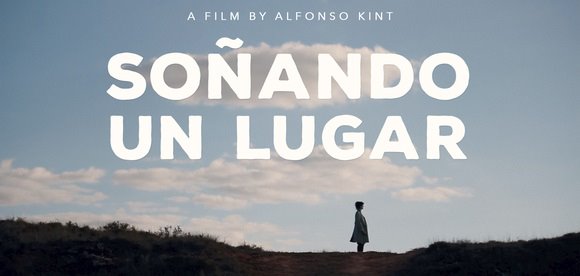
The series will kick off on May 6th, Saturday, with the screening of Soñando un lugar (2018), by Alfonso Kint (freely available for 48 hours through the link https://vimeo.com/799800162). This documentary film shows us firsthand the most attractive aspects of life in a depopulated village in Spain, as well as the problems faced by the inhabitants of these nearly forgotten towns.


On May 13th and 14th, Os fillos da vide (2017), by Ana Domínguez, will be showcased on the channel. If you want to learn about the most ancestral Spanish traditions and everything about our country's wine, don't miss this film in which the director Ana Domínguez shows us a piece of her childhood through the grape harvest and festivities of her hometown in Galicia. You will fall in love with their millennial culture, its people, and its landscapes! (Link to the film: vimeo.com/799821212).

The third film of the cycle, 150 i una Grossa (2020), by Aurora Sulli and Núria Deulofeu, takes us to Ametlla de Merola, one of the smallest towns in Catalonia with just over 150 inhabitants. The town's central core is its theater, but due to lack of resources, it must close down. Everything changes when the town wins the Christmas lottery and the residents decide to use the winnings to refurbish the theater and prevent it from disappearing. The film will be freely available for 48 hours on May 20th and 21st through the link vimeo.com/799848938

Finally, on May 27th and 28th, the film cycle will come to an end with Los saldos (link: vimeo.com/800448839). In this documentary, released in 2022, filmmaker Raúl Capdevila bids farewell to the rural world, which seems destined for disappearance due to the fast pace of modern life. The film tells the story of his return home and how he and his father face the forced industrialization of their town in the form of a Western-style tale.

The films, presented by Instituto Cervantes in collaboration with the Embassy of Spain in the Philippines, will have English subtitles. Admission is free. For further information and updates on this film series, please check out Instituto Cervantes’ Facebook site (www.facebook.com/InstitutoCervantesManila) or the event page: https://www.facebook.com/events/1456518371820323

For further information about the cultural program of Instituto Cervantes please visit Instituto Cervantes’ website (http://manila.cervantes.es), or follow Instituto Cervantes on social media (Facebook: InstitutoCervantesManila; Instagram: institutocervantesmanila).


Ang Pambansang Blog ng Pilipinas Wazzup Pilipinas and the Umalohokans. Ang Pambansang Blog ng Pilipinas celebrating 10th year of online presence
 
Copyright © 2013 Wazzup Pilipinas News and Events
Design by FBTemplates | BTT