BREAKING

Wednesday, October 9, 2024

Alsons Power: Energizing Mindanao's Path to Growth and Development


GENERAL SANTOS CITY – “Alsons Power is helping unlock the vast potential of Mindanao, fueling communities, and driving sustainable economic growth while prioritizing environmental stewardship,” said Antonio Miguel “Anton” Alcantara, CEO of Alsons Power, at the 33rd Mindanao Business Conference (MinBizCon). The event, held at the KCC Convention Center in General Santos City, brought together key leaders to discuss the future of the region’s economy.

As the power business unit of the Alcantara Group—a Mindanao-focused enterprise with significant investments in energy, agriculture, and real estate—Alsons Power plays a crucial role in supporting the region’s rapid development.

Alcantara shared that the Department of Budget and Management is targeting an economic growth rate of 6.5% to 7.5% by 2025, which is expected to drive an even greater demand for energy.

Data from the Independent Electricity Market Operator of the Philippines (IEMOP) and the Department of Energy show that the Philippines reached a peak energy demand of 17,331 megawatts in 2023, which surged to over 19,000 megawatts by the April 2024. Mindanao mirrored this trend, reaching a peak demand of 2,642 megawatts in April this year, an increase from the 2,323 megawatts recorded in the previous year. These rising figures highlight the nation's growing power consumption, driven by heightened economic activity and rising temperatures.

"Our population is rapidly growing, and every household increases power consumption, upgrading the use of electricity. That's about 100–125 megawatts in Mindanao every year," said Assistant Secretary Romeo M. Montenegro, Deputy Executive Director of the Mindanao Development Authority (MinDA), addressing delegates at the Zamboanga Peninsula (ZamPen) Power Summit last August.

"After 4-5 years, a shortage will happen again, which is why proper timing, coordination in terms of policy and investments, and attracting power investment sectors are a must in Mindanao to avoid the rotating brownouts that happened in the past," Montenegro added.

To help meet this surging power demand, Alcantara outlined Alsons Power’s strategy to expand and diversify its energy portfolio. “We’re committed to developing new power plants with a strong focus on renewable energy while optimizing our existing conventional power assets,” he said.

Currently, Alsons Power has a capacity of over 460 megawatts, serving more than eight million people across Mindanao.

“Alsons Power is focused on building our renewable energy portfolio with various hydro and solar projects at different stages of development and implementation. These projects aim to contribute to the country’s goal of reaching a 35% renewable energy share by 2030 and 50% by 2040,” Alcantara said.

Recently, Alsons Power completed its first foray into the renewable energy landscape with the 14.5-megawatt run-of-river Siguil Hydro Power Plant in Maasim, Sarangani Province. This plant has an estimated annual output of around 95,000 MWh, capable of powering over 40,000 households. Siguil Hydro is the fifth renewable energy project to enter Mindanao's Wholesale Electricity Spot Market (WESM).

Alsons Power is also advancing other renewable projects, including the Sindangan Zambo-River Power Plant with a potential capacity of 8.8 megawatts for the run-of-river hydropower plant and 29 megawatts for the solar power plant.

More than three decades after helping address the Mindanao power crisis and the region's growing energy demands, Alsons Power remains committed to delivering safe, reliable, and affordable energy to the Southern Philippines and beyond. Recently, the Alcantara-led power business unit secured its first retail electricity supply agreement with Holcim Philippines, under which it will supply 80% of the energy needs for Holcim’s facilities in Davao and Lugait, Misamis Oriental.

“Reliable and affordable electricity is a key driver in attracting investments to a region. Our power facilities in Maasim, Sarangani, play a critical role in providing the stable energy needed to support and attract investments, not just within the province but across Mindanao,” emphasized Alcantara.

Alcantara also highlighted the company’s role in attracting large-scale industrial projects, including the multi-billion-dollar Panhua Integrated Steel Plant, a flagship venture by China’s Panhua Group, slated for completion by 2026 in the Kamanga Agro-Industrial Ecozone (KAIEZ) in Maasim, Sarangani.

“As we diversify our power sources, we remain committed to driving Mindanao’s growth, fostering economic progress, and safeguarding our natural resources,” Alcantara concluded.

About Alsons Power

Alsons Power is the power business unit of the Alcantara Group, a Mindanao-focused enterprise with significant investments in energy, agriculture, and real estate.

This Press Release has also been published on VRITIMES

Wazzup Pilipinas Founder Joins Global Leaders at ADB’s 12th Business Opportunities Fair 2024


Wazzup Pilipinas!?


Ross Flores Del Rosario, the founder of Wazzup Pilipinas, has been invited to participate in the prestigious 12th Business Opportunities Fair (BOF) 2024, hosted by the Asian Development Bank (ADB). This highly anticipated event, spanning October 9-10, 2024, serves as a premier networking platform, bringing together businesses, procurement experts, and industry leaders to explore opportunities within the ADB’s various projects and initiatives across multiple sectors.

Day 1: Strategic Networking and Insights

The first day will kick off with welcome remarks at 9:00 A.M., followed by a brief introduction of ADB. Throughout the day, the agenda is packed with insightful panel discussions, including “Doing Business with ADB” and “The ADB Procurement System,” both of which aim to help participants understand the key aspects of working with ADB-financed contracts.

Notable sessions include discussions on sustainable procurement, featuring esteemed panelists like Francisco Moreno of ACCIONA and Mark Broomfield from Ricardo PLC. Ross Flores Del Rosario will also have the opportunity to engage in sector-specific dialogues and network with leaders from the energy, agriculture, water and urban development, and public management sectors.

A critical highlight of Day 1 is the Networking Lounge, open all day in Private Dining Rooms 2-4, where participants can relax and establish connections with influential figures from ADB and other global organizations. The evening will wrap up with a networking cocktail event at the ADB Staff Hub, offering further opportunities for meaningful engagement.

Day 2: Exploring Thematic and Sectoral Opportunities

On Day 2, Ross Del Rosario will delve into innovative procurement practices, with a panel featuring experts such as Dwi Wahyuni Kartianingsih, Director for Business Climate and International Cooperation, and Maud Vastbinder, Manager at SKAO Europe. The day also offers thematic opportunities on gender equality, climate change, and digital technology, each providing in-depth presentations and open forums for participant interaction.

One of the day’s highlights is the Consultants’ Clinic, an interactive session designed to address common challenges faced by consultants. Ross, as an influencer and community builder, may find this particularly insightful, especially as Wazzup Pilipinas continues to grow its network within various sectors.

Impact and Significance

Ross Del Rosario's participation in the 12th BOF 2024 is a testament to the growing influence of Wazzup Pilipinas in global development discussions. By attending this event, he will gain critical insights into ADB’s procurement processes and upcoming business opportunities, opening doors for potential collaborations with both public and private sectors. This involvement could further solidify Wazzup Pilipinas as a key player in connecting Philippine businesses and professionals with international markets and development projects.

With a dynamic agenda filled with panel discussions, networking lounges, and thematic deep dives, the 12th BOF 2024 is set to be a game-changer for participants like Ross Del Rosario, providing unparalleled access to ADB’s vast network of projects and leaders across the Asia-Pacific region​.

Tuesday, October 8, 2024

UP Mathematicians Introduce a Different Approach in Detecting Potential Stock Market Crashes

Wazzup Pilipinas!?


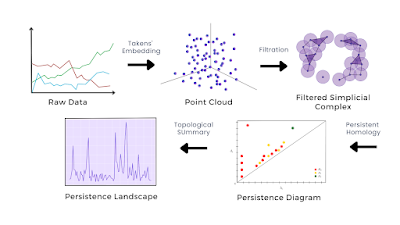
The process of Topological Data Analysis. (Photo credit: Riñon et. al. 2024)

A data analysis method that borrows concepts from topology – the so-called “rubber-sheet geometry” – may soon find its way to a stock trader’s toolkit in analyzing market movements. This method, called Topological Data Analysis (TDA), uncovers patterns in large datasets, preparing them for deeper analysis.

In a study published in the Philippine Journal of Science, Ela Mae Riñon and Dr. Rachelle Sambayan of the UP Diliman College of Science Institute of Mathematics (UPD-CS IM) demonstrated that TDA can be used as an early warning signal for stock market crashes. Their study, which analyzed stock data of three Philippine companies from 2019 to 2021, successfully anticipated periods when the market was about to crash.

“The findings suggest that [TDA] can help identify industries most affected during economic downturns, such as the COVID-19 pandemic, aiding investors and policymakers in minimizing risks,” they said.


The T in Topological Data Analysis

To understand TDA, it may be helpful to compare it with how we observe stars. At first glance, the night sky appears as a seemingly random plot of stars scattered across the vast canvas of the universe. However, with extended observation, patterns emerge: clusters of stars, constellations, and voids become apparent the moment we recognize them. As we continue to gaze at the sky, the random stars fade into the background, while the clusters, constellations, and voids take the spotlight.

This effect is similar to what TDA does with large sets of data points. Essentially, TDA reveals hidden geometric structures within datasets, allowing insights to be drawn from what previously looked like an ambiguous clump of points. “TDA helps uncover patterns, such as clusters forming constellations, loops, or voids,” said the authors.

One tool in TDA, called persistent homology, follows a series of steps to systematically uncover patterns. First, researchers draw a small ball around the data points. Next, they gradually expand the balls until some of them overlap. When this happens, they connect the corresponding points. The balls continue to expand until the points form various figures, which are then classified into what are called homology groups.

Researchers classify the figures into three homology groups: connected components, which are open shapes like line segments; loops, which are closed shapes like triangles; and cavities, which are shapes that extend to the third dimension. As the balls expand, the figures can change from one homology group to another. A connected component, for example, might attach to a data point that closes it off, transforming it into a loop.

As the balls expand, the points connect, forming different homology groups. (Photo credit: Riñon et. al. 2024)

Throughout this process, researchers observe how quickly the figures change homology groups. Figures that switch groups over a short range of ball sizes are considered noise, while those that persist for wider ranges are deemed more significant. Eventually, when the balls are large enough, they will all overlap and all points will be connected into one big structure, marking the end of the process.

Which figures quickly change and which persist is the core idea of TDA, revealing key features of the data. Moreover, the authors explained that “unlike standard methods, TDA is robust to noise and can detect complex patterns that might otherwise go unnoticed, offering a deeper understanding of high-dimensional data.”


Putting TDA to the Test

Dr. Sambayan and Riñon applied TDA to the stock price data of three Philippine companies – Cebu Air (CEB), PAL Holdings (PAL), and Century Pacific Food (CNPF) – from January 2019 to January 2021. They found that when the market was about to crash, the data points began to cluster together, which made their corresponding figures more likely to change homology groups. In other words, the persistence of homology groups weakens as the stock prices start to plummet.

“This weakening of persistence is unexpected because it reveals a distinct change in the data's topological structure during market downturns, which contrasts with the scattered point clouds observed during stable periods,” the authors explained.

To track these changes, they used a persistence landscape, a chart that maps out the crash probability of a stock. In 2019, during a period when CEB was about to crash, its persistence landscape spiked, indicating a high crash probability of 40-60%. Similarly, in early 2020, the landscape showed a high crash probability prior to another CEB crash, which was attributed to pandemic travel bans and lockdowns.

Their study also revealed that TDA is indeed robust to noise, which refers to ordinary fluctuations within the data. Stock prices naturally fluctuate, but not every dip signals an impending crash. Unlike CEB, both PAL and CNPF were more stable during the onset of the pandemic. Although they experienced minor dips during this period, they did not experience a significant crash, which the model correctly anticipated.

However, the authors noted that they only applied the analysis to three companies over a brief period and that other markets or time frames might yield different results. “Additionally, the study's approach to determining thresholds and window sizes may need further refinement to ensure consistency and accuracy in different contexts,” they said.

To further test TDA, the authors recommend extending the analysis to other markets and time frames. “Another avenue for future research is applying the TDA approach to other types of time series data, such as exchange rates, to explore its effectiveness in detecting structural changes and understanding the behavior of stock prices and other financial indicators under different economic conditions,” they concluded.


By: Harvey Sapigao
Ang Pambansang Blog ng Pilipinas Wazzup Pilipinas and the Umalohokans. Ang Pambansang Blog ng Pilipinas celebrating 10th year of online presence
 
Copyright © 2013 Wazzup Pilipinas News and Events
Design by FBTemplates | BTT