BREAKING

Thursday, February 1, 2024

Scents of caution: BAN Toxics alert on imitation and counterfeit perfumes and fragrances


Wazzup Pilipinas!?


Toxic watchdog group BAN Toxics is issuing a public warning about the rampant sale of imitation and counterfeit perfumes and fragrances in the market, cautioning consumers against potential health risks associated with the chemicals in these products.

In a recent market monitoring effort, the group documented ambulant vendors peddling cheap imitated perfumes and fragrances priced between P50 to P180. These counterfeit perfumes closely mimic the packaging and labels of well-known brands, making them appealing to consumers.

Perfume and beauty products rank second as the most counterfeited goods in the Philippines next to apparel in 2022, according to the total reports and complaints received by the Intellectual Property Office of the Philippines.

Thony Dizon, Toxics Campaigner of BAN Toxics, emphasized the risks associated with purchasing cosmetic products with fragrances lacking proper authorization, stating, “Buying perfume and fragrances that have not undergone proper authorization is not only too risky but may expose consumers to harmful substances lurking in the products.”

According to information sourced from the Environmental Working Group (EWG) Skin Deep® Cosmetic Database, the term “fragrance” on the label of cosmetics products conceals an undisclosed mixture of various scent chemicals and ingredients of 3,163 known chemicals. Notably, phthalates, octoxynols, and nonoxynols are highlighted as particularly toxic. Phthalates, commonly used as solvents and stabilizers in perfumes, are identified as potent hormone disruptors linked to birth defects in baby boys. Octoxynols and nonoxynols can break down into persistent hormone disruptors as well.

Potential hazards may arise from ingredients prohibited in cosmetic products or from contamination by heavy metals. The use of substandard and possibly adulterated cosmetic products may lead to adverse reactions such as skin irritation, itchiness, anaphylactic shock, and organ failure.

The Food and Drug Administration (FDA) issued health advisories against using unauthorized cosmetic products such as perfumes, cautioning consumers against purchasing and using them. The agency emphasizes that products bypassing the notification process prevent its ability to guarantee their quality and safety, potentially exposing consumers to health risks.

“As part of our safe cosmetics campaign, we’re committed to monitoring and reporting the unauthorized sale of unregistered and unnotified personal care products in both on-site and online markets. To protect human health and the environment from chemical exposure is our advocacy,” Dizon added.

In a letter sent to the FDA, BAN Toxics urges the agency to conduct Post Marketing Surveillance and testing on imitation and counterfeit perfumes and fragrances. Because of the dangers to the public, the group calls for the issuance of public health advisories and stringent enforcement actions to protect consumers from undisclosed health-damaging chemicals in fragrance products.

Meanwhile, the public is urged to verify whether a product has been notified with the FDA, using the FDA Verification Portal, accessible at https://verification.fda.gov.ph.

UP Chemists Modify Anticancer Compound to Improve Safety and Efficacy


Wazzup Pilipinas!?


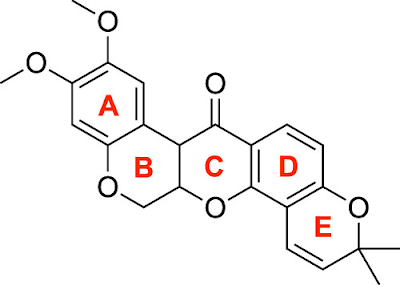
Chemical structure of deguelin. (Photo credit: Francisco, J. A., & Paderes, M. C. Inhibitory effects of B-, C-, and E-ring-truncated deguelin derivatives against A549, HCT116, and MCF-7 Cancer Cells. ACS Omega, 8(45): p. 43109–43117)


Scientists from the University of the Philippines – Diliman College of Science (UPD-CS) have transformed the anticancer compound deguelin into a novel class of compounds that show promise as safer and more effective treatments for colon, lung, and breast cancer.

Originally used as a pesticide and fish poison, concerns arose regarding the safety of administering deguelin to humans once it was identified as a cancer treatment. Science Research Specialist John Alfon Francisco and Dr. Monissa Paderes of the UPD-CS Institute of Chemistry (UPD-CS IC) addressed these concerns by altering the structure of deguelin.

Their altered versions exhibited better qualities than the original compound. Preliminary tests done on human cancer cell cultures revealed reduced adverse effects, prompting Dr. Paderes and collaborators to conduct further research into the safety of these compounds.

Some versions are also more effective against specific types of cancer. “We were amused to find that some compounds have improved anticancer properties than its parent compound, deguelin, with some even surpassing the effectiveness of the commercially available anticancer drug doxorubicin,” Francisco said. For instance, a version named 6a outperformed doxorubicin in treating colon cancer, while versions 3a and 8e excelled in treating lung and breast cancer, respectively.

Their modified versions offer a simpler and more cost-effective production than those developed in previous studies. “The simplicity of the structures, as well as the straightforward synthesis of these compounds, add to the novelty of this study,” Dr. Paderes emphasized.

The researchers created the altered versions by shortening a part of deguelin known as the BCE ring, making the new versions more akin to the deoxybenzoin compound, recognized for its antibacterial and antioxidant properties.

Despite its huge commercial potential, their research is still in its early stages. The next phase involves testing the modified anticancer compounds on animal models. If the compounds are proven effective on animals, it will move on to clinical trials, where it will be tested on humans with colon, lung, or breast cancer. If proven successful, the Food and Drug Administration (FDA) will review and approve the rollout of the compounds as cancer treatments.

“The goal would be to advance these compounds toward clinical trials and potential development as novel anticancer therapeutics,” Dr. Paderes concluded.


References:

Francisco, J. A., & Paderes, M. C. (2023). Inhibitory effects of B-, C-, and E-ring-truncated deguelin derivatives against A549, HCT116, and MCF-7 Cancer Cells. ACS Omega, 8(45), 43109–43117. https://doi.org/10.1021/acsomega.3c06619


By: Harvey Sapigao

DepEd, World Bank unveil teacher development project in Mindanao


Wazzup Pilipinas!?


Strengthening the commitment to assist educators in the country, the Department of Education (DepEd) on Tuesday launched the Teacher Effectiveness and Competencies Enhancement Project (TEACEP) at the Bulwagan ng Karunungan, DepEd Central Office.

The project was developed in partnership with the World Bank to aid DepEd in its institutional reform initiatives to enhance teacher professional development and competency standards.

“Our collective commitment to the MATATAG Agenda is stronger than ever and we have prioritized in aiding the support to improve our teachers’ skills. Today, thank you to the support of the World Bank-International Bank for Reconstruction and Development and with the help of the Department of Finance, we are working to strengthen student learning outcomes in Zamboanga Peninsula, SOCCSKSARGEN, and BARMM through the Teacher Effectiveness and Competencies Enhancement Project or TEACEP,” Vice President of the Republic of the Philippines and Secretary of Education Sara Z. Duterte said.


TEACEP aims to improve the quality of education and equitable access to teaching in Kindergarten to Grade 6 (K-6) in the areas of Region IX, Region XII, and Bangsamoro Autonomous Region in Muslim Mindanao (BARMM), with a content focus on literacy and numeracy.

The loan agreement between the Republic of the Philippines and the World Bank was signed on June 26, 2023, and was declared effective on August 23, 2023.

“I reaffirm and reiterate the World Bank’s enthusiastic support for this crucial investment in education. This is an important project for the country that is fully aligned with the MATATAG Agenda which is a formidable guiding framework for interventions in education,” World Bank’s Country Director for Brunei, Malaysia, Philippines, and Thailand Dr. NdiamÄ— Diop said.

The estimated number of beneficiaries is approximately 57,800 K-6 teachers, 6,060 school heads, and 1.88 million students in grade K-6 in all public elementary schools in the three project-supported regions.
Ang Pambansang Blog ng Pilipinas Wazzup Pilipinas and the Umalohokans. Ang Pambansang Blog ng Pilipinas celebrating 10th year of online presence
 
Copyright © 2013 Wazzup Pilipinas News and Events
Design by FBTemplates | BTT
