BREAKING

Thursday, January 5, 2023

UPD-CS develops automated environmentally-sustainable campus


Wazzup Pilipinas!?


Communities across the Philippines could become more environmentally sustainable, thanks to the University of the Philippines - Diliman College of Science (UPD-CS) spearheading the use of automated environmental monitoring technology and regular environmental testing procedures for possible deployment nationwide.

The AirboxSense is one of several automated air quality sensors deployed within the National Science Complex by the IESM. UPD-CS scientists are looking at the feasibility of rolling out similar initiatives nationwide. (Photo credit: Eunice Jean Patron)

At the behest of UPD Chancellor Fidel Nemenzo, who prioritized the protection and preservation of UPD's natural environment in his vision for the campus, the UPD-CS led other colleges and institutions in the University in setting up sophisticated sensors for keeping an eye on the environment around the clock. The Chancellor appointed the multi-sectoral Task Force on Environmental Sustainability (TFES) to create environmental action points for a possible model for a green campus, which could then serve as the prototype for green spaces nationwide.


Real-time environmental monitoring

Two key action points determined by the expert team are the deployment in the UPD-CS' National Science Complex (NSC) of the AirboxSense system for real-time air quality reporting to the general public, and the establishment of an air and water quality monitoring network with the Diliman Environmental Management Office.

The AirboxSense was co-developed by UP and foreign university partners with funding from the Asia-India Science, Technology, and Innovation Cooperation (AISTC). “Air quality monitoring using AirboxSense in the NSC started in August 2022. It’s an initiative between the Philippines, Malaysia, and India to put up these monitoring devices for air quality control,” explained Dr. Mylene Cayetano, a professor at the UPD-CS’ Institute of Environmental Science and Meteorology (IESM), a member of the UPD TFES, and the Philippine Principal Investigator for the AISTIC.

Aside from deploying automated air quality sensors, the UPD-CS also developed water testing procedures to regularly monitor the University’s creeks and streams. (Screengrab via UPD-CS Facebook page)

To complement the AirboxSense data, the IESM undertakes regular monitoring of the University’s various creeks and streams: water samples are collected at least once a month and analyzed in the laboratory to assess factors such as the presence of excessive nutrients and suspended solids, irregular pH, and alkalinity, among other parameters.


Towards a solar-powered campus

The UPD-CS also aims to lessen its ecological footprint through solar power installations throughout the NSC. By considering the optimal size and placement of solar panels, Dr. Cayetano and her colleagues were able to determine the best ways to address the campus' energy needs. Solar panels can save energy for the UPD-CS by lessening the dependency on fossil fuels during the daytime.

“Together with UPD-CS scientists Dr. Lillian Jennifer Rodriguez and Ms. Jelaine Gan, we calculated the area ng lahat ng rooftop ng CS buildings. We determined the surface area of the rooftops facing south. Then we proposed how many solar panels we need to install in CS para hindi na tayo dependent sa fossil fuels, and eventually we will transform into an efficient campus,” said Dr. Cayetano. “UPD-CS Dean Giovanni Tapang presented this idea to Chancellor Fidel, and it aligns with the Chancellor’s initiative to make UPD an environmentally-sustainable campus,” she added.


Deployment beyond UP

Going beyond the confines of the University, the UPD-CS, and the IESM collaborated with the Rotary Club of Makati on a system that reports real-time data on air quality via the Airtoday.ph website. The system was also initially designed to record and display air quality data on other areas outside the UPD, including the Lung Center of the Philippines and EDSA Muñoz.

“Picking up from this initiative, nagkakaroon ng other initiatives pa towards a smart campus and environmental sustainability,” Dr. Cayetano said. She cited the UPD Electrical and Electronics Engineering Institute (EEEI) for helping automate the AirboxSense through the UP Center for Air Research (UP CARE) program. Dr. Cayetano also highlighted the Robust Optical Aerosol Monitor (ROAM) developed by Dr. Len Herald Lim of the Institute of Chemistry, which could be deployed outside UPD in the future.


Aiming for nationwide deployment

Dr. Cayetano believes that these projects are of nationwide significance: the information they gather and the data they record will greatly help organizations and institutions across the country in finding solutions to environmental issues. “These [information and data] will eventually tell the numbers. Nasaan na tayo? Nasaan ‘yung baseline? Ano ‘yung emissions natin noong walang activities dahil sa pandemic? Ano naman ‘yung increase ng emissions noong nagkaroon ng activities such as face-to-face classes and the opening of the UPD campus and offices? By knowing these, we know where to stand. By knowing those numbers, we will know how to manage the impacts on the environment of such activities.”

Through these and other initiatives, UPD’s TFES is spearheading the creation of tailor-fit approaches to environmental challenges that can be implemented outside the campus. Data collected from these initiatives can also be used by local governments and other decision-makers in managing localized environmental activities.

Wednesday, January 4, 2023

WWF-Philippines, BPI Foundation provide climate risk assessments and livelihood programs for vulnerable communities through years of collaboration


Wazzup Pilipinas!?


The World Wide Fund for Nature (WWF) Philippines and the Bank of the Philippine Islands (BPI), through its social development arm, BPI Foundation, have forged a longtime partnership to address the effects of climate change in the country.

Joint projects between WWF-Philippines and the BPI Foundation, such as the Climate Change Risk Assessment Initiative (CCRAI), Sulong Pinoy, and Project PagSibol, were recently concluded and have successfully provided climate risk assessments and livelihood projects for vulnerable communities.

Launched in 2019, CCRAI, a multi-year study, provided an assessment of the vulnerabilities of the selected cities of Tarlac, Cabanatuan, Calbayog, and Tagum, proposed bankable and SDG-linked projects, and presented the data to BPI and local government units. These cities were chosen as they are rich in natural resources but also prone to severe typhoons and flooding. Through CCRAI, the local government units now have access to the findings and thus can utilize them in formulating their Local Climate Change Action Plans.


The partnership between WWF-Philippines and the BPI Foundation also provided livelihood programs for various vulnerable communities.

According to Bureau of Fisheries and Aquatic Resources MIMAROPA Assistant Director Roberto Abrera, fishers suffered post-harvest losses, or fish spoilage occurring as they transported their catch to the marketplace. In 2015, 25% of post-harvest losses were due to fish spoilage.

Addressing this, the Sulong Pinoy project was implemented in 2020 which supported a total of 2,536 individuals from fishing communities in Bicol and Mindoro. Lagonoy Gulf and Mindoro strait tuna fishers received 50 tuna coolers, 50 transponders, two reefer vans, and seven climate-adaptive food shed farming enterprises through the project.

One of the reefer vans delivered to small-scale handline tuna fishers from the Lagonoy Gulf and Mindoro Strait in Malilipot, Albay through Sulong Pinoy. Reefer vans help fisherfolks to ensure the freshness of their produce, further securing their income.

“This is a big deal for our tuna fishers, who need to ensure the freshness of the tuna to gain a higher price in the market. Every extra peso that our partner fishers are able to earn can go a long way towards supporting them and their communities,” WWF-PH Project Manager Joann Binondo said.

To further address poverty by solving the problem of food security for the financially infirm, the partnership also launched Project PagSibol in the same year, which was able to establish 20 community-managed food shed enterprises in 11 low-income communities from Tarlac, Ormoc, Negros Oriental, Negros Occidental, Surigao del Norte, Lanao del Norte, Zamboanga, and Davao Occidental.

A beneficiary of Project PagSibol showing vegetable crops of the community’s foodshed. WWF-Philippines and BPI Foundation have been working closely to build sustainable food sheds and climate-resilient food production facilities that will assist low-income communities across the Philippines.

Through the initiative, a total of 499 individuals were directly engaged while 2,037 were provided with access to fresh and quality food. It also facilitated financial literacy sessions along with the creation of 10 functional Group Savings and Loan Associations (GSLAs) in these communities with a total of 1,568,000 pesos in savings.

“Our communities need to be able to take care of themselves. They understand this, and the pandemic has made this all the more apparent. These workshops are the first step in a long process towards helping our farming communities to stand up on their own two feet amid the current climate crisis,” WWF-PH Project Manager Monci Hinay highlighted. 


The partnership continues to take on the challenge of aiding food and livelihood security through community-specific programs made possible by years of assessments. The Farm to Table for Fisherfolks project, which will run until 2023, with the goal of helping the local community in Halian, Siargao.

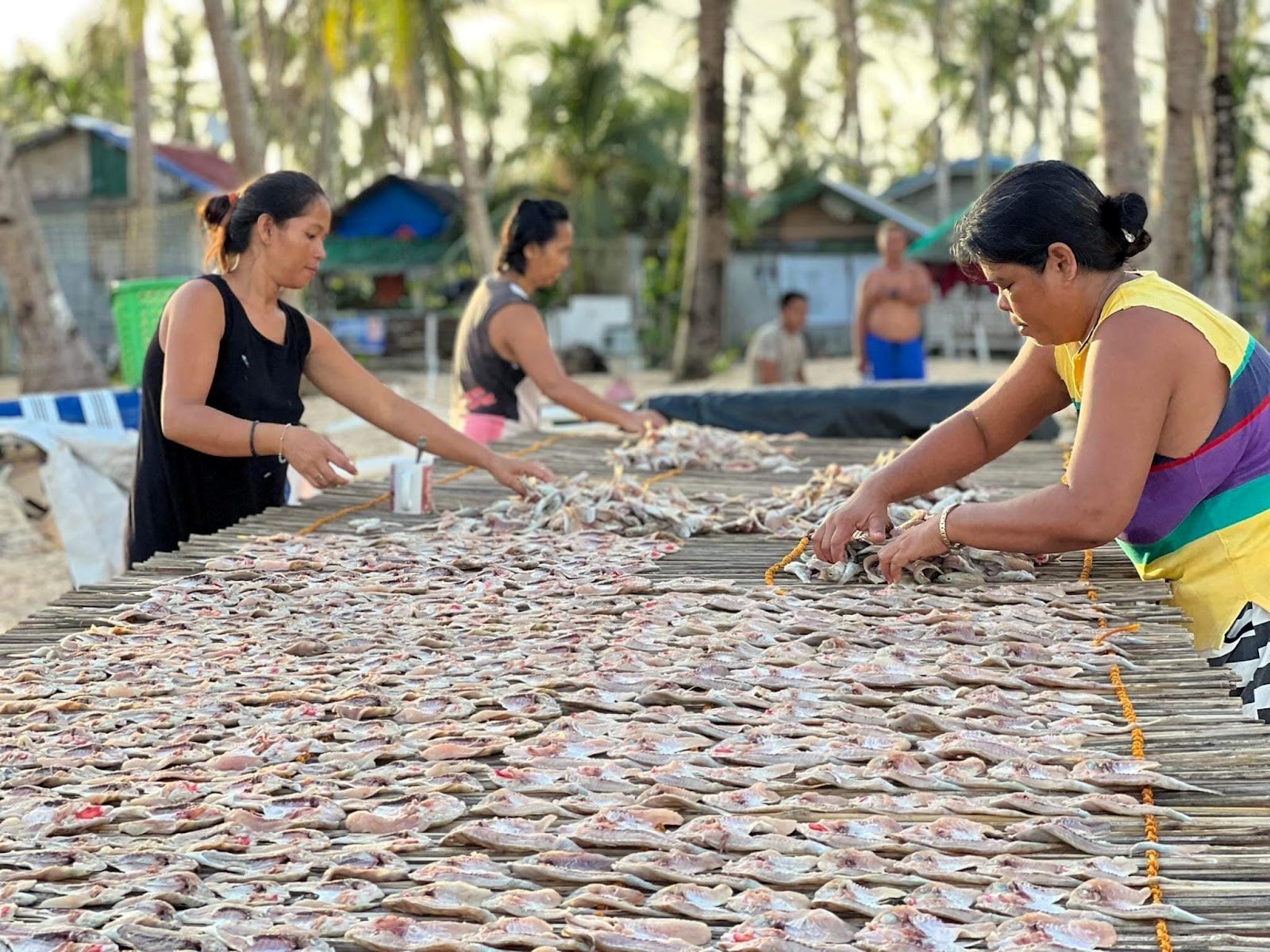
Farm to Table For Fisherfolks, a newly-launched program of the BPI Foundation, aims to provide climate-smart facilities for fish drying and water purification to reduce fish spoilage and promote sustainable livelihood in the community of Halian, Siargao.

Though recognized as an emerging tourism spot with a marine sanctuary, the island barangay of Halian has limited access to appropriate technology to support livelihood and basic necessities such as stable and safe potable water sources. With BPI’s help, facilities for fish drying and water purification will also be built to reduce fish spoilage and increase economic and health benefits for the community. Trainings on fish catch documentation and financial literacy will also be conducted to increase the knowledge and capacities of the members.

As the Philippines continues to grapple with the economic impact of the COVID-19 pandemic, rural hunger and livelihood insecurity remain as problems that need to be addressed. WWF-Philippines and BPI Foundation continue to find solutions to #ChangeTheEnding for our environmental frontliners.


About WWF-Philippines:

The World Wide Fund for Nature Philippines is an environmental non-government organization committed to creating an impact on biodiversity protection and responding to the climate crisis - towards a safe and just recovery. WWF-Philippines works with a host of partners including national and local governments, to co-create inclusive, innovative, and interdisciplinary solutions that emphasize the role of science in the service of life.

WWF-Philippines' focus is on scaled solutions with our partners to match the enormity of the tasks required to address the urgent environmental challenges facing the present and next generations of Filipinos. Its mission is "to stop, and eventually reverse the accelerating degradation of the Philippine environment – to build a future where Filipinos live in harmony with nature."

BingoPlus gives away P50 million in jackpot prizes to welcome 2023


Wazzup Pilipinas!?


BingoPlus welcomed 2023 with a bang, giving away Php 50 million in cash prizes to lucky winners on January 1 as they played in the Sure Bingonaryo segment of Bingo Mega, one of the ways to play Bingo and win the big prizes at BingoPlus.

Five of 34,000 players who played the special segment on New Year’s Day from 8:00-10:30 in the evening, became instant millionaires after winning the multi-million jackpot prizes.

The first lucky winner pocketed over Php 14 million, while the second and third winners took home over Php 6 million each, The fourth and fifth jackpot winners became Php 9 million and Php 11 million richer respectively on the first day of the year and complete the set of Sure Bingonaryo winners.

The fun-filled and festive Sure Bingonaryo portion of Bingo Mega was hosted by popular celebrity host Boobsie together with BingoPlus hosts Danesse, Queeni, Bam Bam, and Bea. BingoPlus prepared the special New Year offering to express gratitude to Filipinos who have supported them since their launch early last year.

BingoPlus awarded more than P1.4 billion in prizes in 2022. BingoPlus is the country's first and only live streaming bingo that has secured a license from PAGCOR. Visit www.bingoplus.com for more details.
Ang Pambansang Blog ng Pilipinas Wazzup Pilipinas and the Umalohokans. Ang Pambansang Blog ng Pilipinas celebrating 10th year of online presence
 
Copyright © 2013 Wazzup Pilipinas News and Events
Design by FBTemplates | BTT
