
Wazzup Pilipinas?!
The uncomfortable truth about friendship, morality, and the choices we make every day
"Are you gonna let politics ruin a friendship?"
It's a question that echoes through dinner tables, workplace conversations, and social media threads with increasing frequency. The expected answer, delivered with a knowing shake of the head, is usually some variation of "Of course not—friendship is more important than politics."
But what if that's the wrong question entirely?
The Myth of Apolitical Living
In a viral social media exchange that perfectly captures our current cultural moment, one user posed this very question, only to receive a response that cuts to the heart of a deeper truth: "Yes tf I am." But it was the follow-up explanation that truly resonated, accumulating thousands of shares and sparking countless debates.
"People talk about politics as if it's this isolated, abstract concept that only matters at election time," the response continued. "Somebody's politics is their world view. It's whether they think certain human beings deserve rights. It's how they think the world should be. And if somebody thinks that the world should be colder, meaner, less accepting and downright hostile to people that are different to them, then sure as f*ck is the friendship over."
This perspective forces us to confront an uncomfortable reality: the personal is political, and the political is deeply personal.
Beyond the Ballot Box: When Worldviews Clash
The notion that politics exists in some separate sphere from our daily interactions is not just naive—it's dangerous. Consider a seemingly mundane conversation from decades past that illustrates this point perfectly.
In the 1980s and 90s, during the height of the AIDS crisis, advocating for condom use wasn't just about sexual health—it was a political act. When young men dismissed condoms because they "decrease sensation," prioritizing their momentary pleasure over their partners' health, safety, and reproductive choices, they weren't just making a personal decision. They were making a statement about whose comfort mattered and whose didn't.
"Now why would I want to be friends, real friends, with men who have no capability of respecting their sexual partner, casual or serious?" reflects one person who lived through those conversations. "That's a sign of misogyny to me."
This anecdote reveals how seemingly private choices reflect broader value systems. The decision to use protection isn't just about individual preference—it's about respect, equality, and the fundamental question of whether another person's wellbeing matters as much as your own comfort.
The False Binary of Friendship vs. Values
The demand to separate friendship from politics creates a false binary that ignores how deeply our values shape our relationships. When someone asks you to overlook their political beliefs "for the sake of friendship," they're often asking you to ignore fundamental disagreements about human dignity and worth.
This isn't about partisan politics or policy preferences. It's about the deeper philosophical questions that politics ultimately represents: Who deserves respect? Who gets to make choices about their own body? Who is worthy of protection? Who belongs in our community?
As one advocate from the AIDS awareness era noted: "If anyone believes otherwise or wants to quote Jebus, Cheeses, Hebus or whatever, in opposing condoms, they ain't worth persevering."
The frustration in that statement isn't about religious differences—it's about watching people prioritize ideology over human lives.
Everything is Political: From Bedrooms to Boardrooms
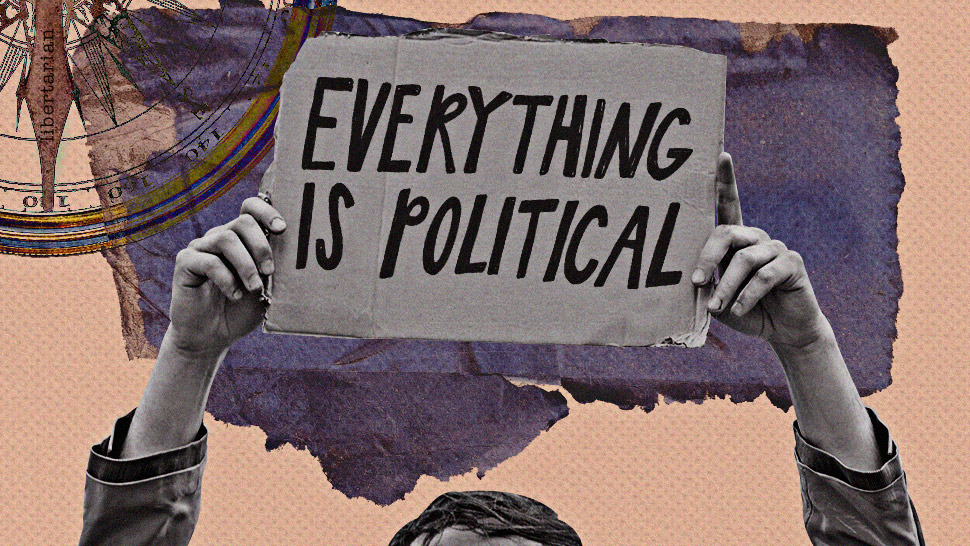
The phrase "everything is political" often triggers eye-rolls and accusations of extremism. But when examined closely, it reveals a simple truth: our daily choices reflect our values, and our values shape our politics.
Consider these "non-political" decisions:
Choosing to wear a mask during a pandemic
Deciding whether to use someone's preferred pronouns
Selecting where to shop or what brands to support
Determining how to discuss historical events with children
Choosing how to respond to discrimination when you witness it
Each of these choices sends a message about what we value and whom we consider worthy of consideration. They're all political acts, whether we acknowledge it or not.
The Cost of Cognitive Dissonance
Maintaining friendships with people whose worldviews fundamentally oppose your core values creates a form of cognitive dissonance that can be emotionally exhausting. It requires constant compartmentalization, swallowing disagreements that feel existential, and often staying silent when you witness harm.
This burden disproportionately falls on marginalized communities, who are frequently asked to maintain relationships with people who vote against their rights, dismiss their experiences, or support policies that directly harm them.
The ask isn't really about preserving friendship—it's about preserving comfort. Specifically, the comfort of those whose political views don't threaten their daily existence.
Redefining Friendship in Divided Times
True friendship requires more than shared interests or pleasant conversation. It requires mutual respect, empathy, and care for each other's wellbeing. When someone's political beliefs actively work against your safety, dignity, or basic rights, the foundation of friendship crumbles.
This doesn't mean every political disagreement should end relationships. People can have different opinions on tax policy, infrastructure spending, or regulatory approaches while maintaining mutual respect. But when the disagreement touches on fundamental questions of human worth and dignity, the stakes change entirely.
Moving Forward: Boundaries as Self-Care
Recognizing that everything is political isn't about creating unnecessary conflict—it's about honest self-assessment. It's about acknowledging that our relationships either affirm our values or force us to compromise them.
Setting boundaries based on values isn't shallow or intolerant. It's an act of integrity. It's choosing to surround yourself with people who see your full humanity and that of others. It's refusing to subsidize worldviews that cause harm through the currency of your friendship and attention.
As we navigate an increasingly polarized world, perhaps the question isn't whether we should let politics ruin friendships. Perhaps the question is whether we should let the desire to maintain friendships prevent us from living according to our values.
The Choice We All Must Make
In the end, we all must decide: What are we willing to overlook for the sake of peace? What compromises are we prepared to make? And at what point does staying silent become complicity?
The person who responded "Yes tf I am" to the original question wasn't being dramatic or divisive. They were being honest about a reality that many of us prefer to avoid: our relationships are reflections of our values, and our values have consequences.
In a world where political beliefs increasingly determine who lives safely, who gets healthcare, who can marry whom they love, and who gets treated with basic dignity, the luxury of separating politics from personal relationships becomes not just naive, but harmful.
Sometimes the most radical act isn't maintaining a friendship despite political differences—it's having the courage to end one because of them.
The question isn't whether politics should influence our friendships. The question is whether we're brave enough to admit that it already does.





 Ross is known as the Pambansang Blogger ng Pilipinas - An Information and Communication Technology (ICT) Professional by profession and a Social Media Evangelist by heart.


Post a Comment